Skip to content

Great interest from the industry at WACQT workshop

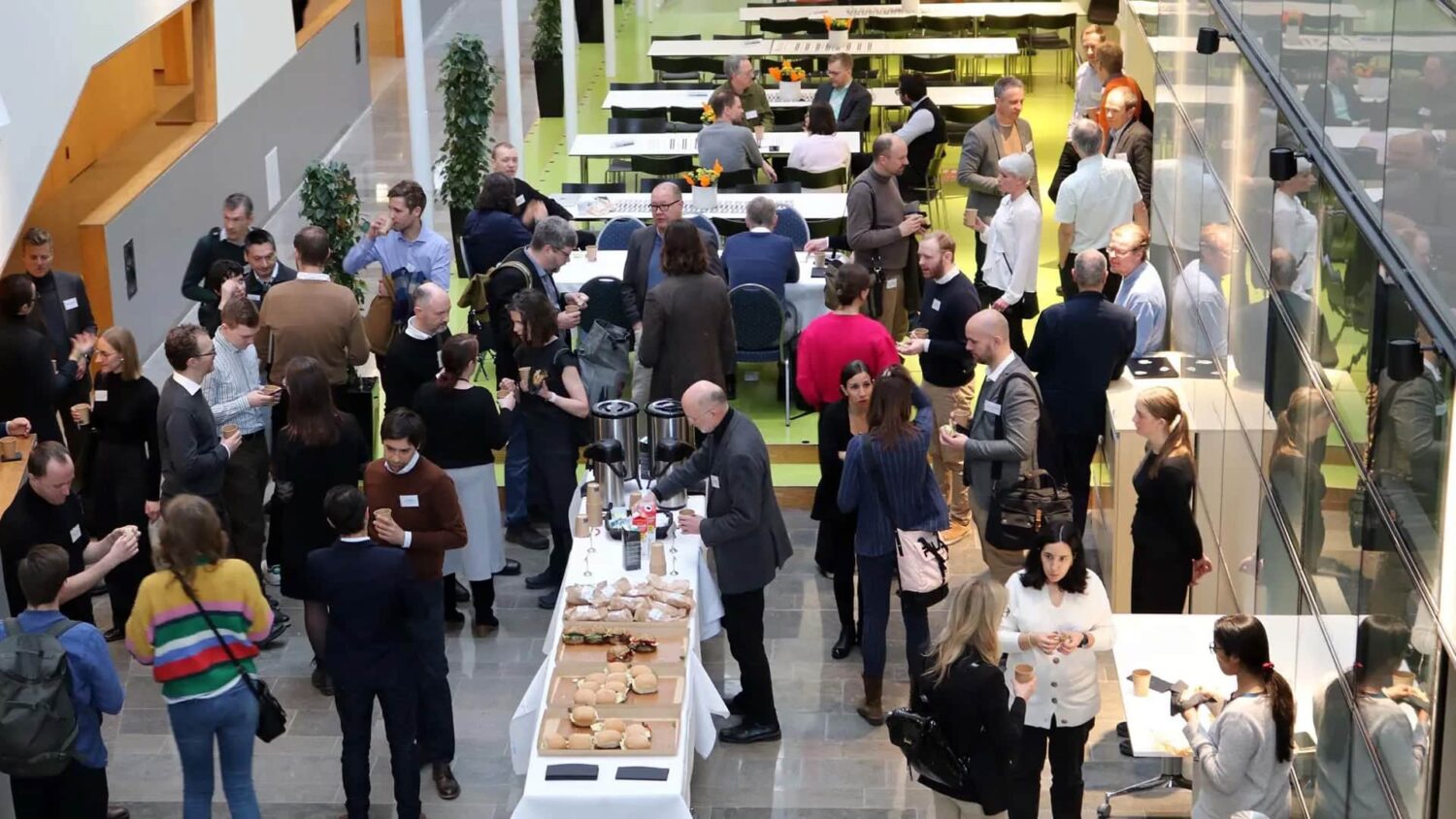
Overhead picture of group at the WACQT workshop

An impressive number of actors from the industry attended WACQT’s workshop to learn more about how the center’s quantum research is now being put to concrete use in an increasing number of areas. “It is good for us to see all the work that is going on within WACQT and to be updated on the progress, but also to understand which use cases that others in the industry are working on and which could be relevant to us as well,” says Maria Stranne from SKF, one of many curious business representatives present.

Societal interest in the possibilities of quantum technology is increasing – a tendency quite noticeable at WACQT’s industry workshop, which took place at the end of March. The number of people registered for the workshop was undeniably high. Nearly 90 global actors from business and academia showed up at Kollektorn to learn more about how quantum technology is already being used by the center’s established industrial partners – and to gain insights into how the technology could develop their own operations.

The program also included updates on ongoing national quantum initiatives, such as the newly started WACQT testbed, by which Swedish companies and researchers can test both quantum algorithms and hardware.
Highlights and events

The world’s first Arctic weather satellite was launched into orbit in 2024. Now, the Chalmers-based technology used in the satellite’s microwave radiometers will be deployed in Europe’s new weather satellite programme, EPS-Sterna. Image: European Space Agency
2026 03 27
Myfab Chalmers

Chalmers research at the heart of record order for Europe’s new weather satellites

Read more
Event
2026 03 23
Myfab Chalmers , Myfab , Myfab KTH , Myfab Lund , Myfab Uppsala

April 15: Myfab joins SEMICON 2026

Read more
The conceptual image shows how the researchers’ sculpted pattern of tiny hills and valleys – smaller than one millionth of a hair’s thickness – on the substrate (MgO, at the bottom) guides how the atoms in the superconducting material (YBCO, on top) settle. At the interface between the two layers, an electronic landscape allows superconductivity to occur at higher temperatures than previously possible – even when high magnetic fields were are applied. Credit: Chalmers University of Technology / Riccardo Arpaia
2026 03 18
Myfab Chalmers

Superconductor advance could unlock ultra-energy-efficient electronics

Read more
Event a university house - Ångström Laboratory - Myfab Uppsala
2026 03 12
Myfab Chalmers , Myfab , Myfab KTH , Myfab Lund , Myfab Uppsala

June 1-3: Nordic user meeting in Uppsala

Read more
See all highlights