Skip to content

A “quantum leap” at room temperature

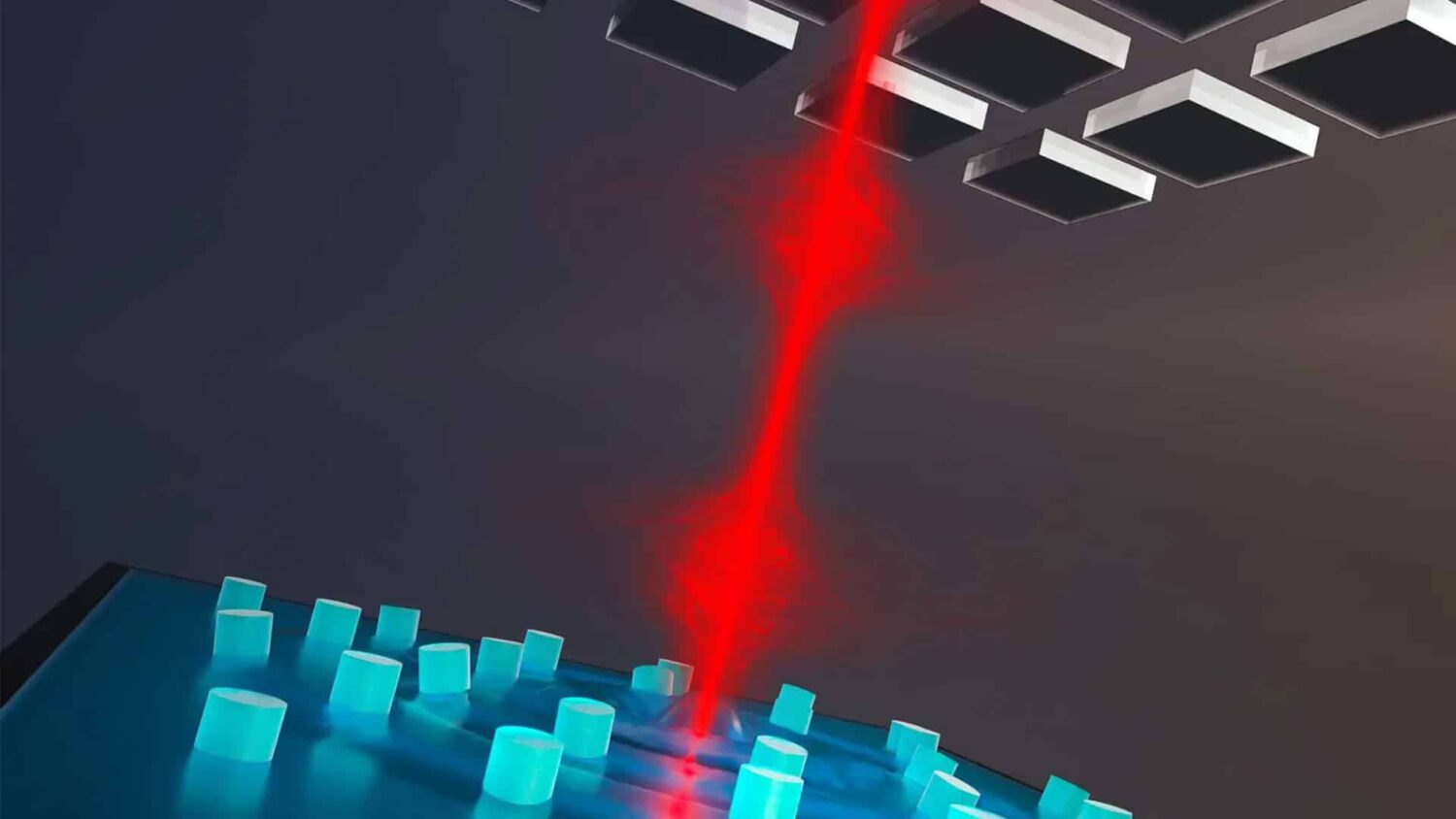
Illustration depicting a quantum leap

In the realm of quantum mechanics, the ability to observe and control quantum phenomena at room temperature has long been elusive, especially on a large or “macroscopic” scale. Researchers at École Polytechnique Fédérale de Lausanne, EPFL – including Nils Johan Engelsen who is currently active at Quantum Technology at Chalmers University of Technology – have achieved a milestone by controlling quantum phenomena at room temperature. Traditionally, observations of quantum phenomena have been confined to environments near absolute zero, where quantum effects are easier to detect. But the requirement for extreme cold has been a major hurdle, limiting practical applications of quantum technologies.

Now, a study led by Tobias J. Kippenberg at EPFL and Nils Johan Engelsen at Chalmers University of Technology redefines the boundaries of what’s possible. The pioneering work blends quantum physics and mechanical engineering to achieve control of quantum phenomena at room temperature.

Highlights and events

Event a university house - Ångström Laboratory - Myfab Uppsala
2026 03 12
Myfab Chalmers , Myfab , Myfab KTH , Myfab Lund , Myfab Uppsala

Register latest March 15: NNTN & NNUM in Uppsala

Read more
Illustration of the device concept. A memory chip based on stacked quantum materials. By placing a magnetic layer on top of a topological material, the researchers were able to switch magnetization using very small electrical currents and without applying an external magnetic field. Illustration: Lalit Pandey
2026 03 11
Myfab Chalmers

Quantum materials breakthrough for energy-efficient data processing

Read more
Ove Öhman has been a bridge-builder between academia and the business sector for several decades and has helped strengthen Uppsala’s innovation environment. Photo: Mikael Wallerstedt, Uppsala University
2026 03 10
Myfab Uppsala

Ove Öhman receives prize as a bridge-builder between research and innovation

Read more
A research team at Chalmers University of Technology has developed a new diminutive laser technology that makes it possible to create a miniature biosensor with the laser source and optics integrated onto a one-centimetre semiconductor chip. This enables significantly smaller sensors, paving the way for portable optical technology and for moving certain types of medical sampling from hospitals to the patients’ homes. Illustration: Chalmers/Erik Strandberg
2026 03 10
Myfab Chalmers

Miniature laser technology could bring lab testing into your home

Read more
See all highlights