Skip to content

Quantum communication could become the superpower of the future

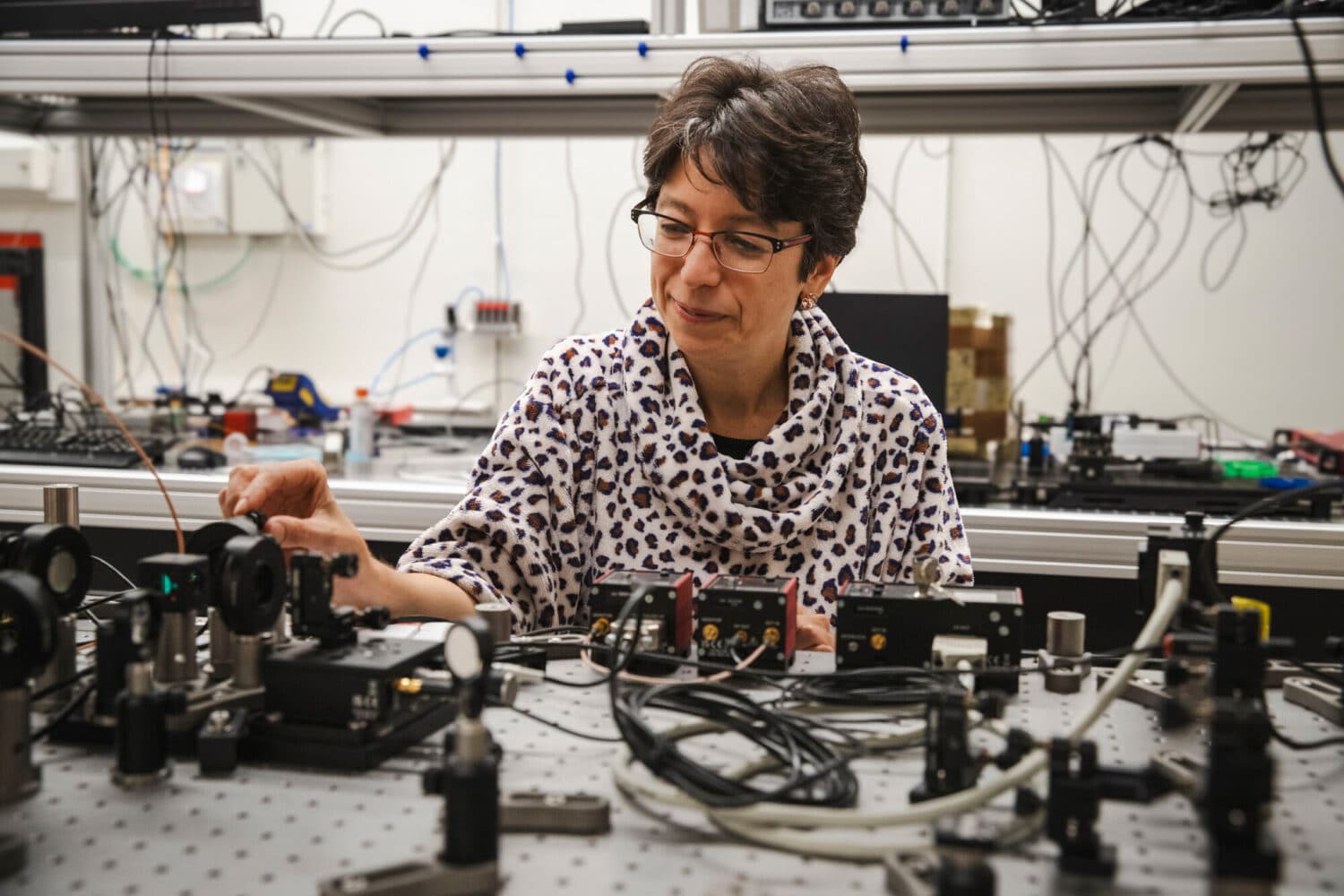
Katia Gallo in her lab
Katia Gallo | Photo KTH

Katia Gallo, Professor of Photonics, has always been fascinated by the combination of the laws of physics and engineering. She currently coordinates Sweden’s participation in a European initiative to build a quantum communication network.

“We are developing an infrastructure in Sweden that will eventually be linked with those of other EU member states,” she says.

The Swedish initiative, the National Quantum Communication Infrastructure (NQCIS), which is led by Gallo, was inaugurated earlier this year. Several other universities and a few companies are involved in the research project. The pilot facility at KTH will eventually serve as a test bed for companies, public authorities and organisations — a place to test and develop new products and services, and to explore how quantum communication could transform the way they work and communicate.

The project is being developed in two phases: first, each country will develop its own infrastructure, and later these networks will be interconnected and linked to satellites.

“Quantum communication is about building resilience, guaranteeing cybersecurity, strengthening Europe’s competitiveness, and fostering knowledge exchange with other nations, “says Gallo.

Highlights and events

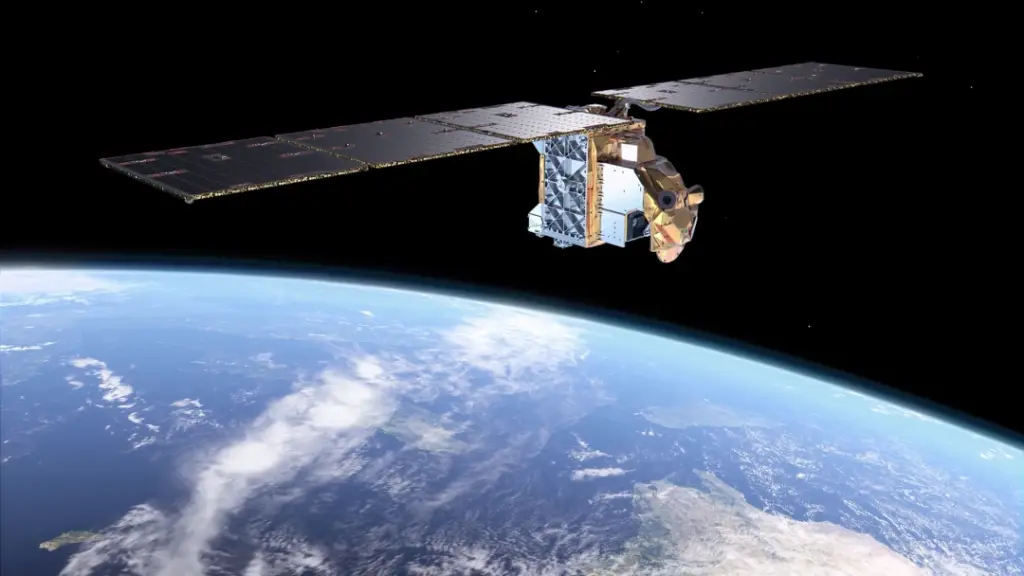
The world’s first Arctic weather satellite was launched into orbit in 2024. Now, the Chalmers-based technology used in the satellite’s microwave radiometers will be deployed in Europe’s new weather satellite programme, EPS-Sterna. Image: European Space Agency
2026 03 27
Myfab Chalmers

Chalmers research at the heart of record order for Europe’s new weather satellites

Read more
Event
2026 03 23
Myfab Chalmers , Myfab , Myfab KTH , Myfab Lund , Myfab Uppsala

April 15: Myfab joins SEMICON 2026

Read more
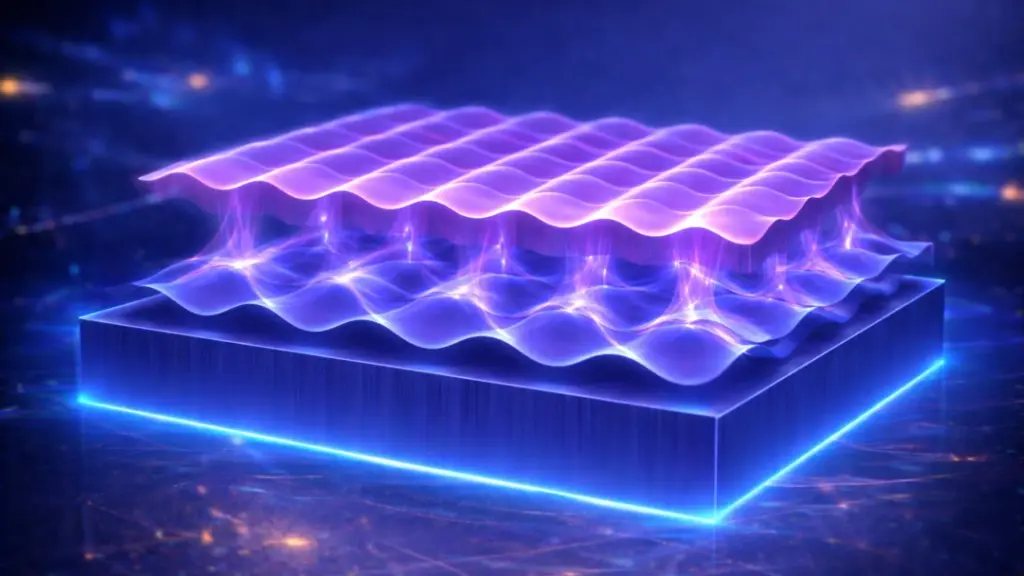
The conceptual image shows how the researchers’ sculpted pattern of tiny hills and valleys – smaller than one millionth of a hair’s thickness – on the substrate (MgO, at the bottom) guides how the atoms in the superconducting material (YBCO, on top) settle. At the interface between the two layers, an electronic landscape allows superconductivity to occur at higher temperatures than previously possible – even when high magnetic fields were are applied. Credit: Chalmers University of Technology / Riccardo Arpaia
2026 03 18
Myfab Chalmers

Superconductor advance could unlock ultra-energy-efficient electronics

Read more
Event a university house - Ångström Laboratory - Myfab Uppsala
2026 03 12
Myfab Chalmers , Myfab , Myfab KTH , Myfab Lund , Myfab Uppsala

June 1-3: Nordic user meeting in Uppsala

Read more
See all highlights