Skip to content

Researchers develop holes 60,000 times smaller than human hair

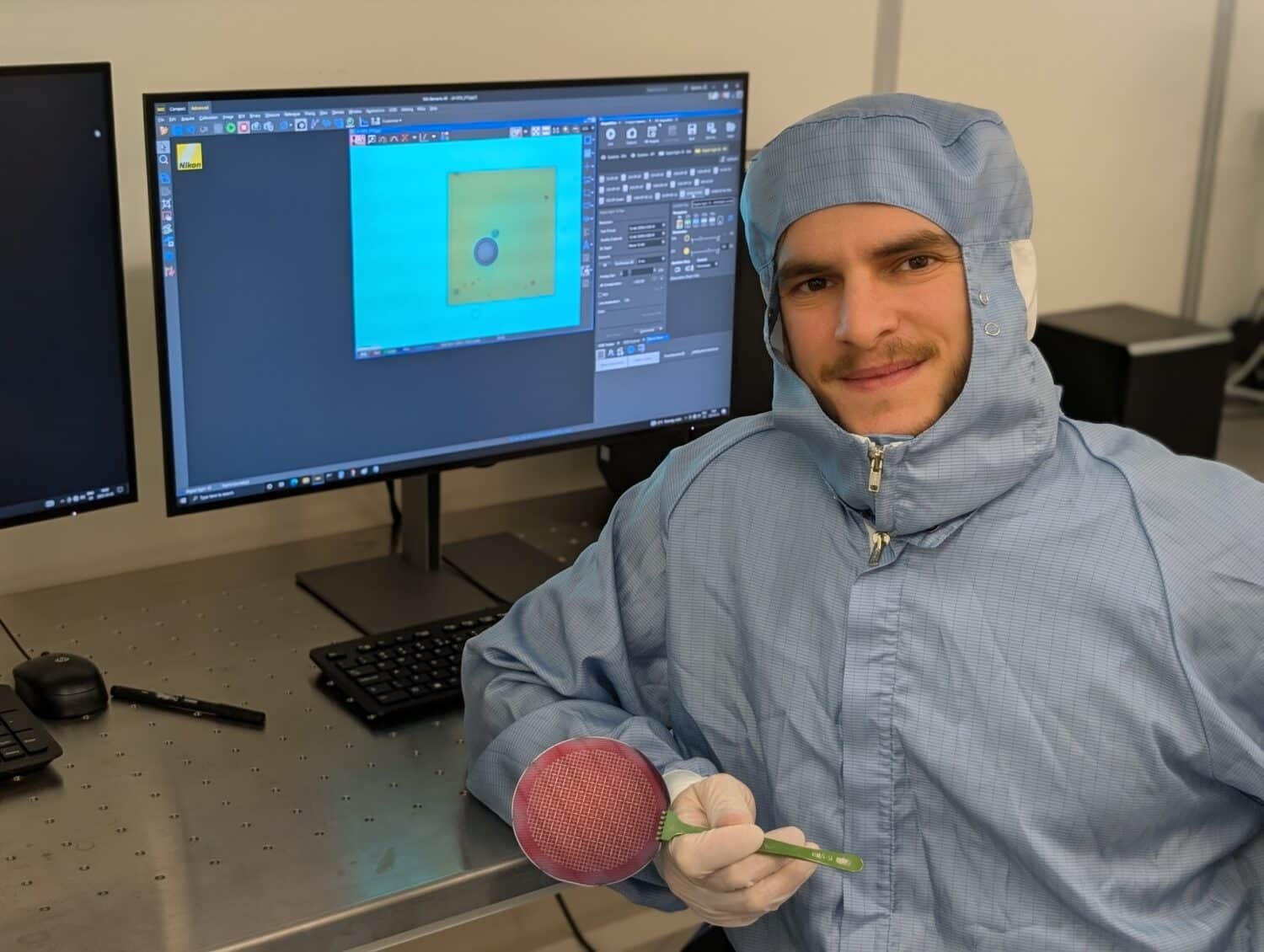
KTH PhD student Fabio De Ferrari pictured with samples from his research on DNA sensing. He believes this has potential to advance personalized medicine worldwide. Photo: Cecilia Aronsson

New process offers extreme precision that could revolutionize medical diagnostics and beyond.

KTH PhD student Fabio De Ferrari and colleagues have discovered a cost-effective way to create ultra-small pores in silicon – smaller than 5 nanometers in diameter.

Using gold nanoparticles and a method called metal-assisted chemical etching, the researchers also discovered a self-limiting effect—like a drill that stops automatically at just the right depth—making the technique highly precise and scalable.
Highlights and events

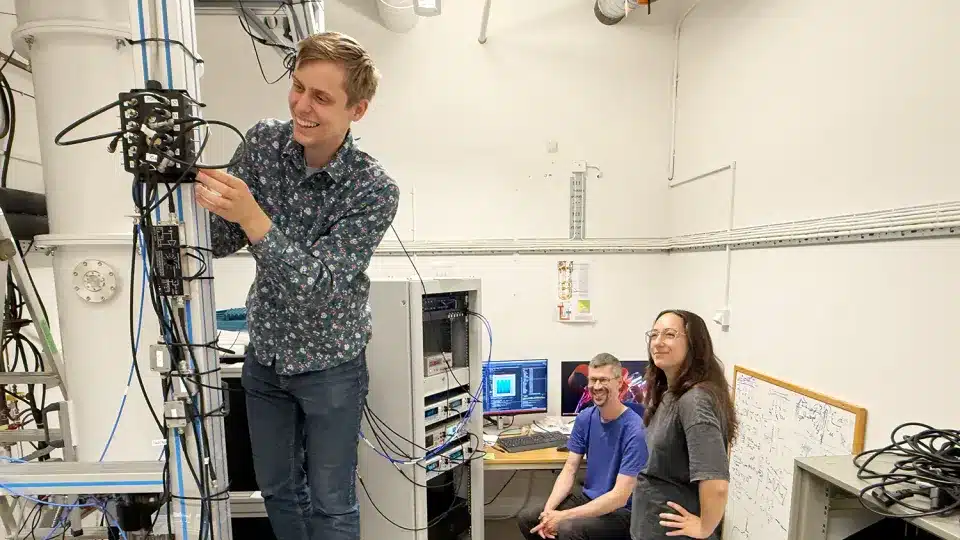
From left: Professor Cecilia Persson and Professor Maria Tenje in the cleanroom at the Ångström Laboratory, Myfab, which is used in fields such as materials science, life sciences, and micronanosystems. Photo: Mikael Wallerstedt.
2026 04 27
Myfab Uppsala

Expertise in biomedical engineering brought together in a new research programme

Read more
2026 04 15
Myfab Uppsala

Göran Gustafsson Prizes in Engineering Physics awarded to Uppsala researchers

Read more
PhD student Giulio Cavaliere at the Additive Manufacturing Lab Photo: Mikael Wallerstedt
2026 04 14
Myfab Uppsala

Innovative projects receive grant from Knut and Alice Wallenberg Foundation

Read more
Event a university house - Ångström Laboratory - Myfab Uppsala
2026 04 02
Myfab Chalmers , Myfab , Myfab KTH , Myfab Lund , Myfab Uppsala

June 1-3: Nordic user meeting in Uppsala

Read more
See all highlights