Joining forces to strengthen skills and access
Lund University, Chalmers University of Technology, and KTH Royal Institute of Technology – three universities that account for the majority of Swedish education and research in the field of semiconductors – are now joining forces to strengthen the supply of skills and access to research infrastructure in the country.
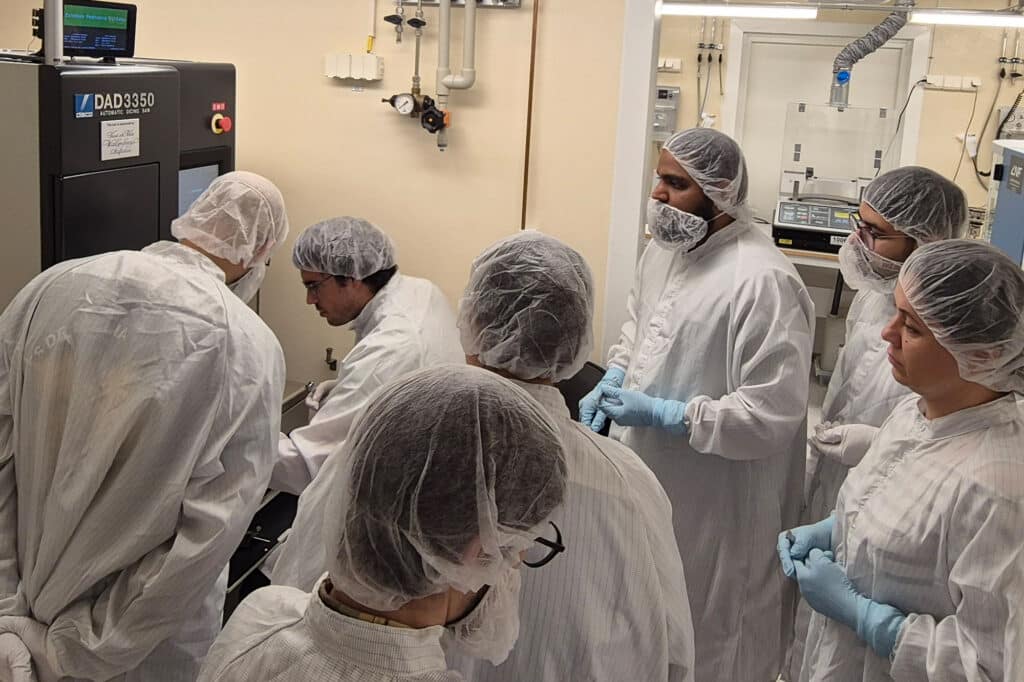
The three universities will train employees at small and medium-sized companies and startups, with knowledge of technology and software support needed to develop semiconductor systems. They also aim to simplify access to pilot lines, which are essential facilities for developing and scaling up new semiconductor technology. The higher education institutions also highlight the need for increased learning through a broad range of undergraduate courses and collaboration with industry considering in-demand skills development for professionals.
“In a troubled world, we create independence and contribute to ensuring access to critical components in Europe”
“Our three universities strive to work together to strengthen the competitiveness of Swedish industry and society for digitalisation, security, and the green transition. In a troubled world, we create independence and contribute to ensuring Europe access to critical components,” says Erik Renström, Vice-Chancellor of Lund University.
“The expertise and infrastructure in the form of cleanrooms and design environments at our universities give Sweden a strong starting point in a European context. The technical universities can be socially important actors of crucial importance and this investment is a way for us to take that responsibility,” says Martin Nilsson Jacobi, President of Chalmers.
“We are well equipped to join forces to become a strong partner for the next step in the EU’s chips initiative. We three universities complement and strengthen each other,” says Anders Söderholm, President of KTH.
Original Article: https://www.nano.lu.se/article/strengthening-swedish-semiconductor-capability