Skip to content

Management Meeting for Nordic Nanolab Network (NNN) in Iceland

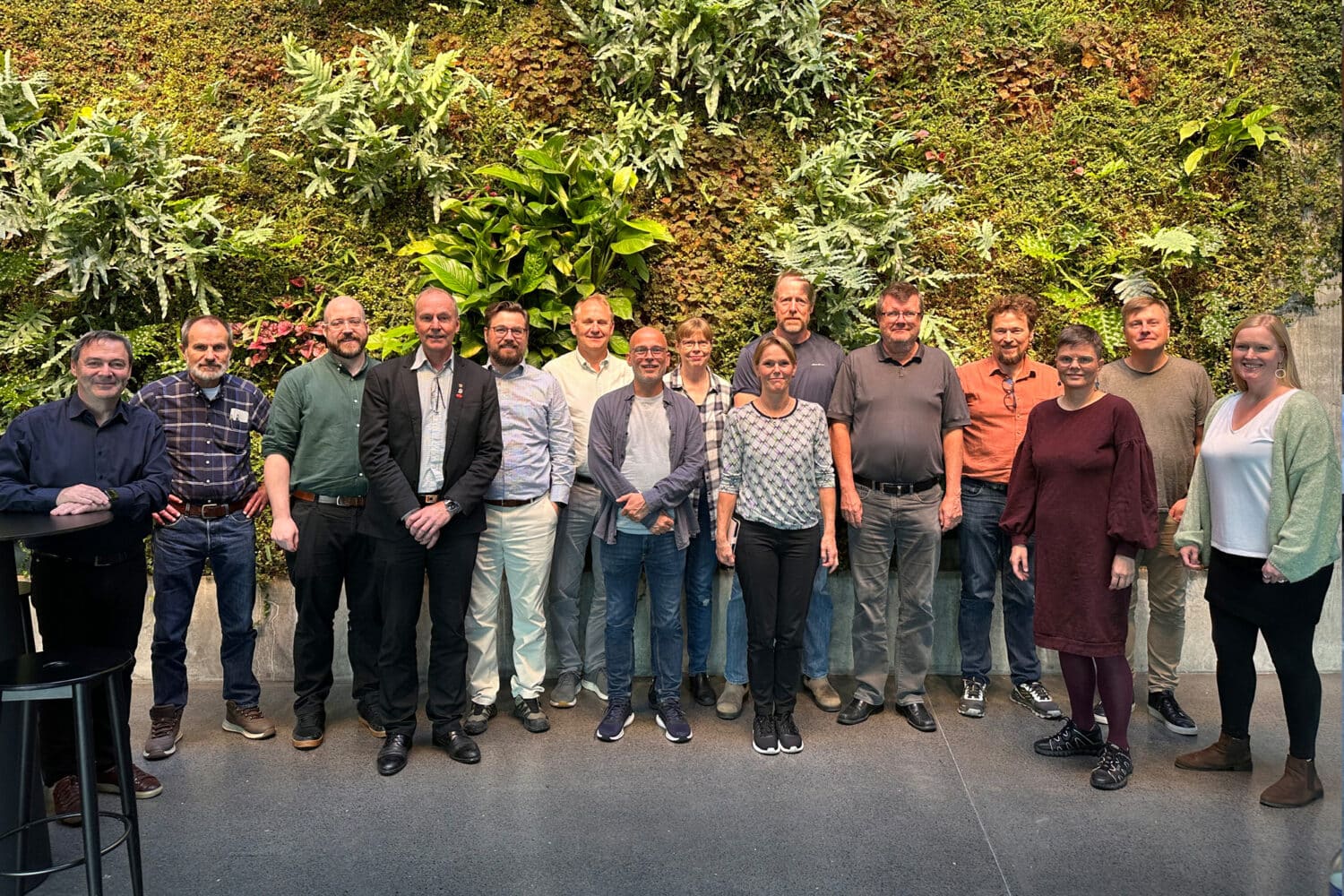
persons in front of green wall
NNN at University of Iceland

The Nordic Nanolab Network is a collaborative network of national research infrastructures for micro- and nanofabrication across the Nordic countries. With 12 cleanrooms in the region, NNN improves access for both academic and industrial users.

The management meeting was held in Reykjavík, hosted by the University of Iceland and its nanolab and materials science center, led by Unnar Arnalds.

The agenda included a tour of the university’s facilities with briefings on current activities, roundtable discussions, and a visit to the volcanic area just outside Reykjavík.

The network’s key value lies in facilitating the exchange of experiences—both challenges and successes—across areas such as operational and safety-related technical issues, infrastructure development, talent acquisition, and funding and sustainability conditions.

NNN’s infrastructures are crucial for advancing technologies that drive progress in medical tech, electronics, materials science, and environmental solutions – strengthening Europe’s semiconductor ecosystem.

Highlights and events

Event a university house - Ångström Laboratory - Myfab Uppsala
2026 02 09
Myfab Chalmers , Myfab , Myfab KTH , Myfab Lund , Myfab Uppsala

Nordic user and technician meetings to Myfab Uppsala

Read more
2026 02 05
Myfab Chalmers

Humidity-resistant hydrogen sensor can improve safety in large-scale clean energy

Read more
2026 01 29
Myfab Chalmers

Novel quantum refrigerator benefits from problematic noise

Read more
AMSwitch proposed an altermagnetic chip that harnesses a new class of quantum magnetic materials called altermagnets, distinguished by their alternating and huge spin-split electronic states. The schematics depict the chip alongside a magnet (left) and a band structure (right) revealing a pronounced spin splitting between the up-spin (red) and down-spin (blue) electronic bands.
2026 01 23
Myfab Chalmers

Major EU funding for new generation of quantum magnetic chips

Read more
See all highlights