
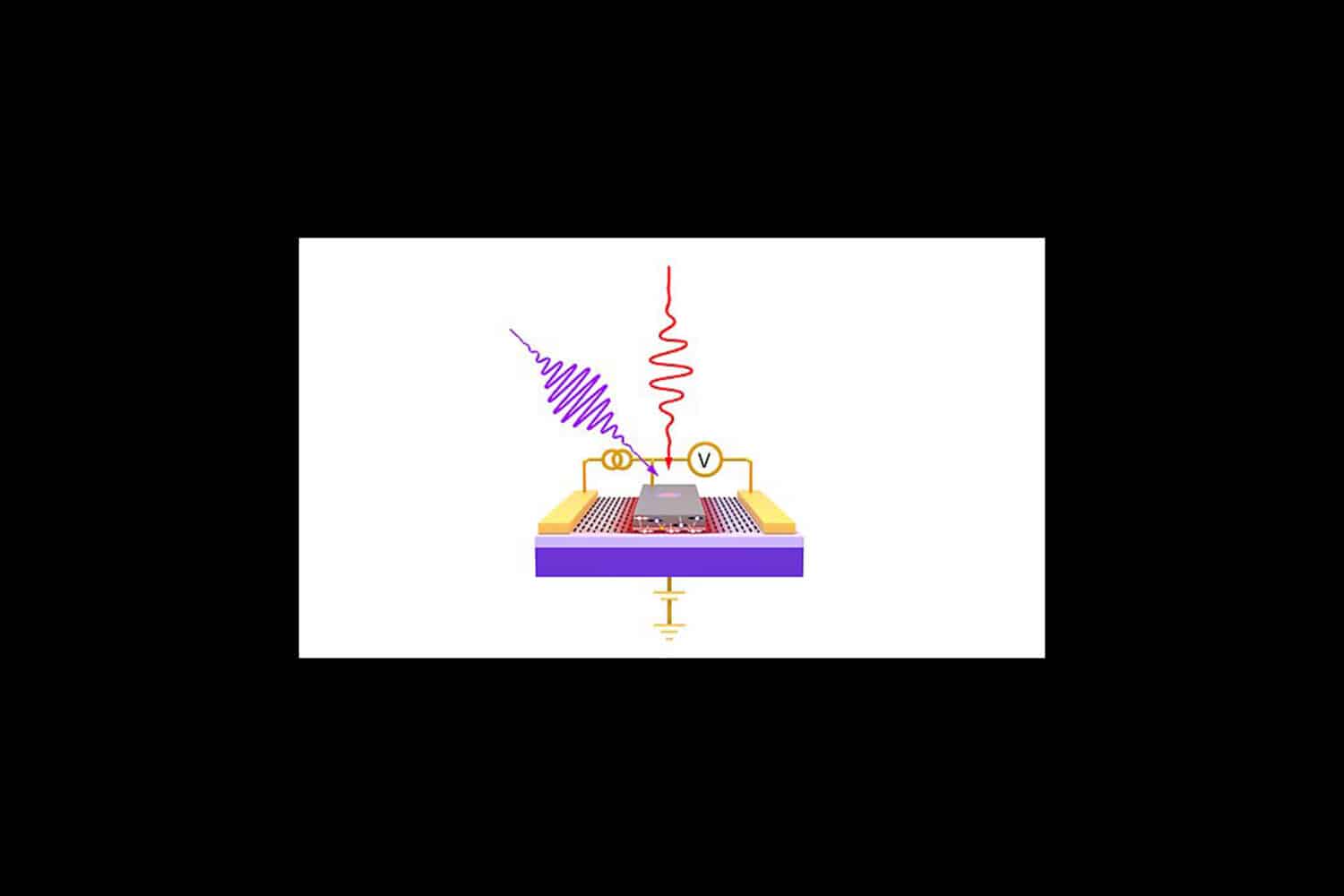
Researchers at Uppsala University, have together with international collaborators, developed a new device that speeds up magnetic processes using only an electric field, without the need to alter the shape or material. The results could enable faster data processing and memory storage for energy-efficient AI, and potentially facilitate new quantum technologies.
Modern electronic devices work by controlling the flow of electric current, that is the movement of electrons. However, electrons, in addition to their negative charge, also possess a magnetic property called spin, which is like a tiny magnet. In fact, these tiny electronic magnets together make a material magnetic. Combining electronics with magnetism has given rise to the field of spintronics, which uses the spin of electrons and has enabled groundbreaking advancements in data storage capacity in hard disk drives and got much smaller and much more effecient, from refrigerator-sized disk drives with a few MB memory storage capacity to coin-sized disk drives with TB memory storage capacity.
Increasing the speed of data storage can be transformational for reducing power consumption in data centres, such as Google Drive or BOX, and artificial intelligence infrastructure, like ChatGPT. This requires magnets to switch faster, and the challenge is to achieve this without altering the magnetic material or shape in devices.
For the first time, researchers have developed a new device called a spin field effect junction, SFEJ, that can double the speed of demagnetization of a magnetic thin film by an electric field.